Battery Power and Display Dimensions Impacting Strategic Decisions in Card Games Across Devices
Written by Riley Perry · Nov 1, 2026
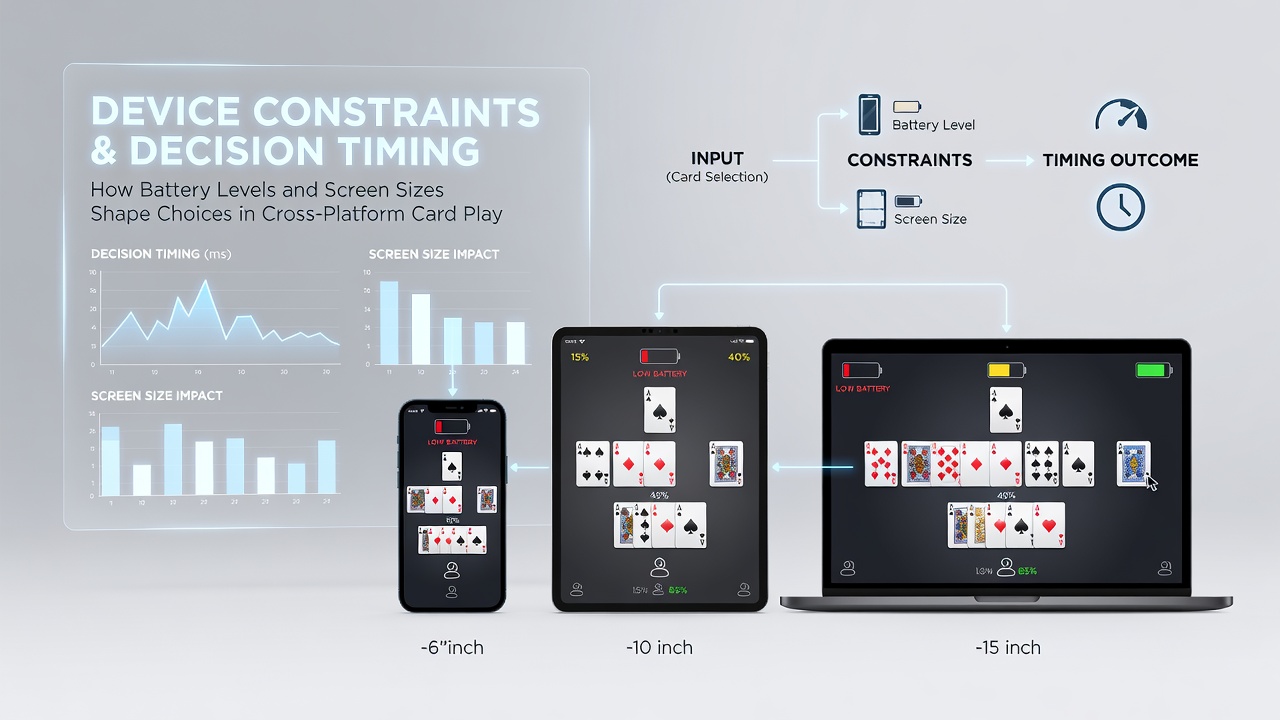
Battery Power and Display Dimensions Impacting Strategic Decisions in Card Games Across Devices
Data from November 2026 shows that battery levels and screen sizes continue to influence how players approach card games on cross-platform applications, with patterns emerging across mobile, tablet, and desktop environments. Researchers tracking usage in multiple regions note that low battery warnings prompt adjustments in betting frequency and session length, while screen dimensions affect the visibility of card details and timing of decisions.
Studies conducted by academic institutions reveal that players on devices with smaller screens often spend additional seconds reviewing hands because reduced display space compresses information layouts. This delay compounds when battery percentages drop below twenty percent, leading users to accelerate certain actions or switch to simplified interfaces offered by the same platforms.
Battery Levels and Player Timing Patterns
Platform analytics collected through 2026 indicate that sessions initiated with full battery charges last longer on average than those starting below fifty percent charge. Operators report that users facing imminent low-power alerts tend to complete hands faster, reducing the interval between decisions by up to fifteen seconds in some tracked cohorts. These shifts appear consistent across regions monitored by gaming oversight bodies in North America and Europe.
One analysis from a Canadian research group linked battery drain rates directly to changes in risk assessment during live card matches. Participants in the study who received battery notifications mid-session showed measurable increases in conservative plays, such as folding earlier in rounds compared to those with stable power indicators. The findings align with data released by state regulators in Pennsylvania, where application logs demonstrate similar timing compressions during peak evening hours in November 2026.
Screen Size Effects on Decision Visibility
Screen dimensions shape how quickly users process card arrangements and opponent cues in cross-platform environments. Larger displays allow simultaneous viewing of multiple elements including pot sizes, timers, and chat functions, whereas smaller screens require scrolling or tab switching that extends decision windows. Industry reports compiled by trade associations note that tablet users complete actions in shorter average times than smartphone users when identical game variants run on the same software versions.
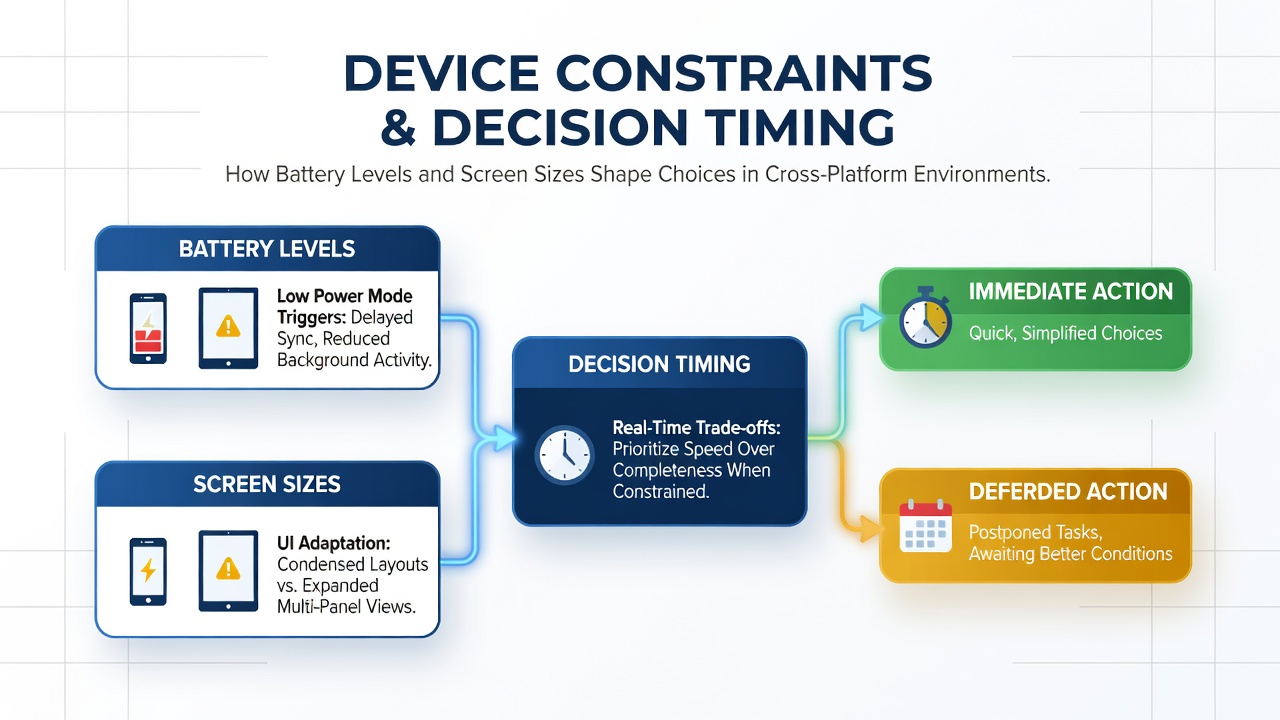
Cross-platform developers adjust interface scaling based on detected device specifications, yet residual differences persist because operating systems handle rendering at varying resolutions. Observers at research centers have documented that players on compact screens frequently enable zoom functions or switch to landscape mode to compensate, actions that add measurable seconds to each turn. These adaptations become more pronounced when combined with battery conservation modes that limit background processes and reduce refresh rates.
Combined Constraints Across Platforms
When battery depletion coincides with smaller screen sizes, the cumulative effect on choice architecture becomes more evident in aggregated logs. Data sets from November 2026 highlight that smartphone sessions under low-power conditions record higher rates of auto-fold features or quick-bet presets compared to tablet sessions running at comparable battery thresholds. Platform providers respond by surfacing battery-aware prompts that suggest shorter variants or reduced animation loads.
Regulatory summaries from Australian authorities and university-led reviews in the United States both reference device telemetry as a variable worth monitoring for fairness evaluations. The reports emphasize that timing disparities tied to hardware constraints do not alter game outcomes but do influence participation styles across user groups. Developers therefore incorporate adaptive algorithms that normalize certain interface elements regardless of detected battery or display parameters.
Platform Adaptations and User Responses
Application updates released through late 2026 introduced battery-threshold toggles that automatically simplify graphics and collapse menus on phones while preserving full layouts on tablets. User adoption metrics indicate that those who activate such options experience fewer interruptions during extended matches. Similar features appear in desktop clients that detect connected mobile sessions, allowing seamless transitions when power levels fluctuate.
Evidence from longitudinal tracking shows that players who frequently switch devices within a single day adjust their strategies according to the constraints of each screen. Those moving from larger tablets to smaller phones mid-session often increase the use of pre-set actions, reflecting learned responses to reduced visual bandwidth and faster battery consumption rates on portable hardware.
Conclusion
Hardware variables including battery levels and screen sizes continue to shape decision timing and strategic selections in cross-platform card environments throughout November 2026. Aggregated statistics from multiple oversight sources demonstrate consistent correlations between these constraints and observed play patterns, prompting ongoing refinements in application design. The interplay of power availability and display capacity remains a measurable factor in how participants navigate card-based activities across device types.