Time Zone Shifts Reshaping Peak Windows in Global Digital Card Competitions
Written by Morgan Koch · Sep 20, 2026
Time Zone Shifts Reshaping Peak Windows in Global Digital Card Competitions
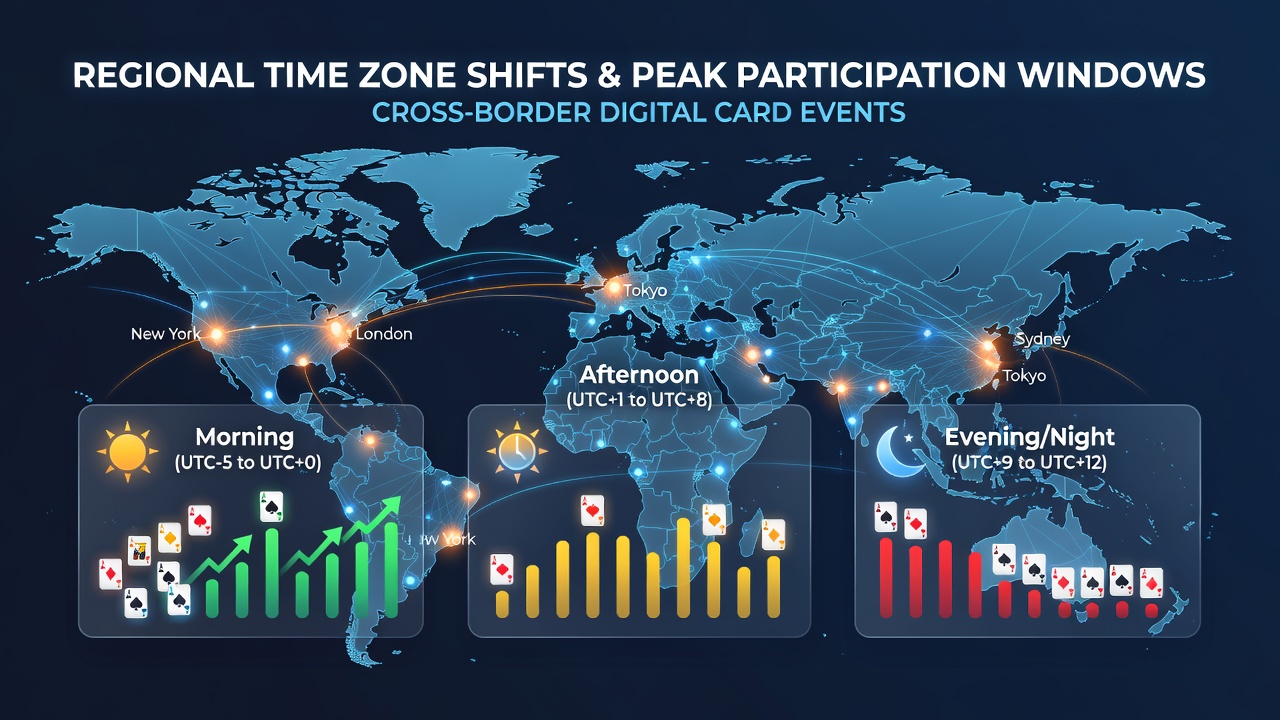
Regional time zone differences create distinct participation rhythms in cross-border digital card events because players align sessions around local work schedules, family commitments, and sleep cycles while operators maintain 24-hour platforms. Data from multiple gaming jurisdictions shows that events spanning several continents experience staggered peaks rather than single unified surges, and these patterns become more pronounced when daylight saving changes occur in one region but not another. Observers note that Australian participants often log in during evening hours that coincide with morning activity in Europe, which produces overlapping windows where tables fill rapidly.
Mapping Participation Patterns Across Continents
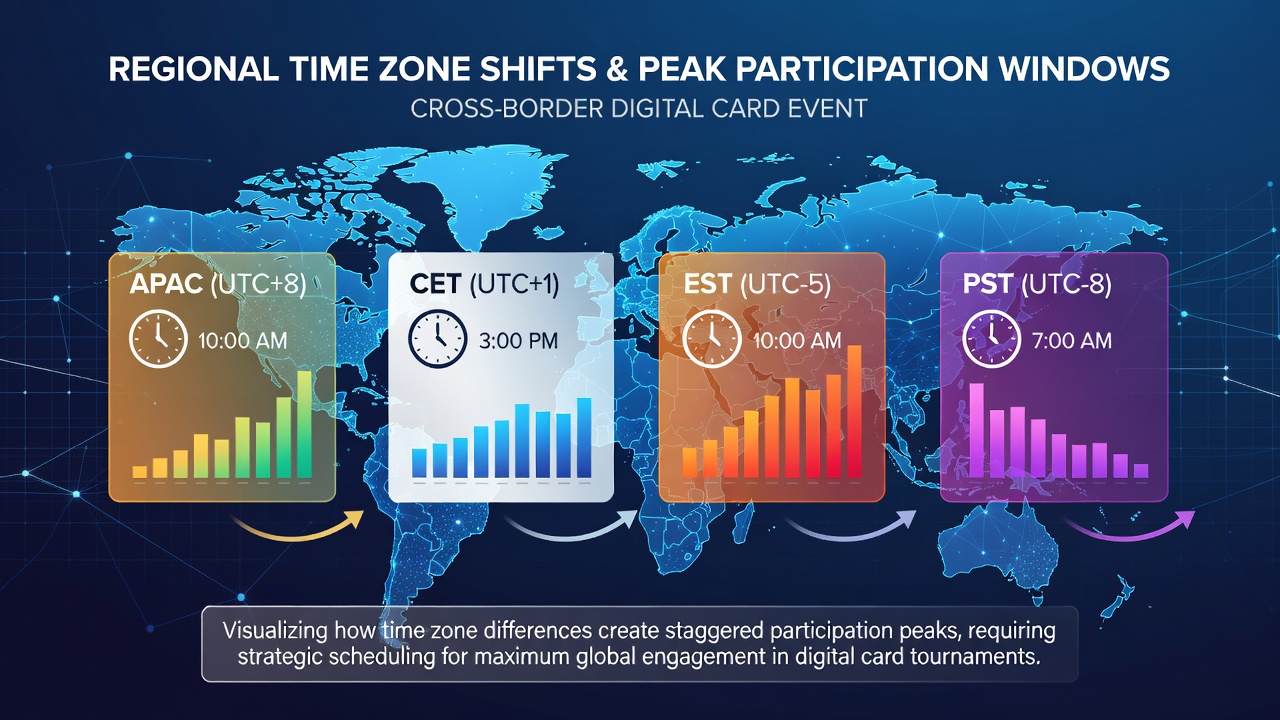
Studies tracking user logins in major platforms reveal consistent clusters tied to specific time offsets, with North American users driving volume between 7 PM and 11 PM local time while Asian regions contribute during their afternoon and early evening slots. When daylight saving time begins in the United States each March, the gap between Eastern Standard Time and Greenwich Mean Time narrows by one hour, shifting the overlap with European players and causing measurable changes in table occupancy rates. Researchers at institutions monitoring online gaming behavior have documented how these adjustments lead operators to adjust tournament start times to capture the new high-traffic intervals that emerge after the clock change.
European data collected through regulatory reporting indicates similar shifts occur in reverse when the continent moves its clocks forward, creating a ripple effect that alters peak availability for players in South America and Africa. Platforms respond by offering staggered start times for recurring events, allowing participants in different zones to select sessions that fit their local calendars without requiring operators to maintain entirely separate regional servers.
Impact of Daylight Saving Transitions on Event Scheduling
Daylight saving transitions produce the most noticeable disruptions because they alter the relative positioning of time zones without changing the underlying event structure. In September 2026, several major card platforms recorded increased concurrent users during traditionally quieter mid-morning periods in North America once European clocks reverted, demonstrating how a single regional adjustment redistributes global traffic. Operators tracked these movements through aggregated login metadata and adjusted promotional offers to maintain engagement across the newly aligned windows.
Platforms that publish start times in coordinated universal time rather than local time reduce confusion during transition periods, yet many still provide optional local conversions so users can plan around personal schedules. Those who study these systems find that players adapt quickly once the new overlap patterns become predictable, often migrating to events that now fall within their preferred hours after a clock change.
Operator Strategies for Managing Cross-Zone Traffic
Operators address these dynamics by analyzing historical participation data segmented by registered time zone, then scheduling flagship events during periods that capture the largest combined audience from two or more major regions. Some platforms introduce rolling qualifiers that begin at fixed intervals throughout the day, ensuring that at least one session aligns with peak hours in each active market. This approach spreads load across servers while giving players flexibility to join when their local conditions support sustained focus.
Industry reports from organizations such as the Gaming Technologies Association show that platforms using predictive scheduling based on time zone analytics maintain steadier daily averages than those relying on static global start times. The same reports note that sudden policy changes in one jurisdiction, such as new tax rules or licensing requirements, can indirectly affect participation by altering the number of active players from that region and thereby shifting the global peak windows that remain.
Player Adaptation and Platform Tools
Players adapt to these shifting windows through built-in tools that display local equivalents of event times and send reminders calibrated to individual time zones. Many platforms now include filters that highlight events occurring during a user’s preferred hours, reducing the need for manual conversion. Data collected across multiple years indicates that users who consistently select locally convenient sessions show higher retention rates than those who join at arbitrary global times.
Community forums and discussion boards document players sharing strategies for tracking time zone changes, including setting device clocks to multiple zones or using third-party converters integrated directly into the gaming apps. These habits become especially relevant around transition dates when one region springs forward or falls back while others remain unchanged, creating temporary mismatches that platforms mitigate through automated notifications.
Conclusion
Regional time zone shifts continue to influence peak participation windows in cross-border digital card events through predictable yet evolving overlaps that operators track and accommodate with targeted scheduling. Evidence from regulatory filings and platform analytics demonstrates that daylight saving adjustments and fixed offset differences redistribute traffic in measurable ways, prompting the development of flexible start times and user-facing conversion tools. As global participation grows, the ability to align events with multiple regional rhythms remains a central factor in maintaining consistent engagement across diverse markets.